
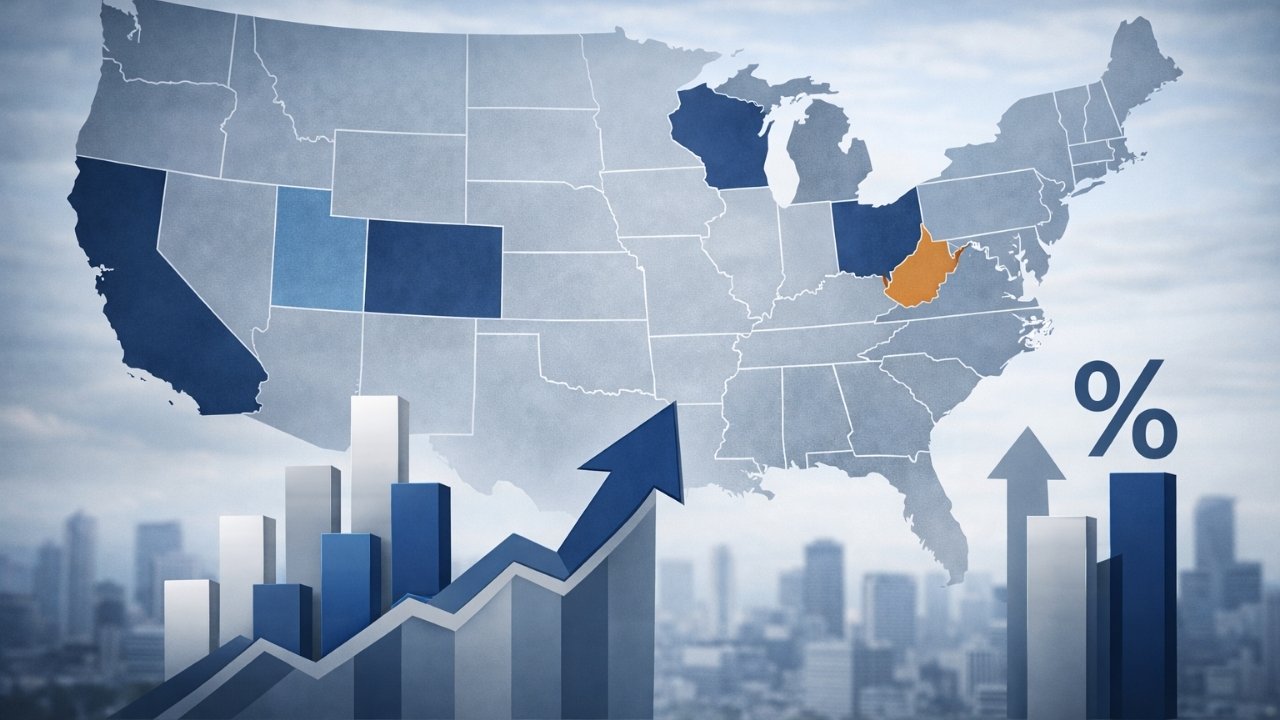
Unemployment figures are among the most widely used indicators for assessing the health of the U.S. labor market. While the national unemployment rate offers a broad overview, state-level data paints a more detailed picture of how economic conditions vary across the country. Differences in industry composition, population shifts, and recent employment trends often cause some states to experience higher joblessness even when the overall economy appears stable.
The most recent state-level employment data from the U.S. Bureau of Labor Statistics (BLS) indicate that several states have unemployment rates above the national average. This indicates that there remain substantial differences between regions.
Excluding covid, the unemployment rate is at its highest level in over 8 years.
The labor market is deteriorating particularly quickly for young workers, who are facing a 10.6% unemployment rate. pic.twitter.com/5GvKz7w0OX
— Steven Rattner (@SteveRattner) December 16, 2025
Table of Contents
How State Unemployment Rates Are Calculated
The BLS produces state unemployment statistics through its Local Area Unemployment Statistics (LAUS) program. This program combines data from household surveys, payroll employment reports, and other labor market indicators to estimate the number of unemployed individuals actively seeking work.
To ensure consistency, the data is seasonally adjusted. This adjustment removes predictable patterns such as holiday hiring spikes, school-year employment changes, or seasonal tourism effects. As a result, comparisons between states and over time are more reliable.
The national unemployment rate was 4.4 percent as of the September 2025 state-level release. However, several states reported noticeably higher figures.
States Reporting the Highest Unemployment Rates
| Rank | State | Unemployment Rate |
|---|---|---|
| 1 | California | 5.6% |
| 2 | Nevada | 5.3% |
| 3 | New Jersey | 5.2% |
| 4 | Oregon | 5.2% |
| 5 | Michigan | 5.1% |
| 6 | Ohio | 4.8% |
| 7 | Alaska | 4.7% |
| 8 | Kentucky | 4.7% |
| 9 | Massachusetts | 4.7% |
| 10 | Delaware | 4.5% |

California currently leads the list, reflecting recent job reductions in technology, professional services, and selected manufacturing sectors. Nevada follows closely, where employment levels remain closely tied to tourism and hospitality activity. The presence of Midwestern and Northeastern states on the list shows that elevated unemployment is not limited to any single geographic region.
How These Figures Compare to the National Labor Market
Placing state unemployment rates alongside national data helps clarify the extent of regional variation across the country.
| Labor Market Measure | Rate |
|---|---|
| National unemployment rate | 4.4% |
| Highest state unemployment rate | 5.6% |
| Lowest state unemployment rate | 2.0% |
| Difference between highest and the lowest states | 3.6 percentage points |
This gap underscores the uneven nature of labor market conditions. States with unemployment rates above the national average by more than one percentage point may represent tens of thousands of additional unemployed individuals, depending on population size.
Factors Contributing to Higher Unemployment in Certain States

Higher unemployment rates are often driven by structural and economic factors rather than short-term fluctuations. Common contributors include a strong dependence on industries sensitive to economic cycles, such as tourism, construction, and manufacturing. When demand in these sectors slows, job losses can occur more quickly.
Another factor is population growth that outpaces job creation. In states where more people enter the labor force faster than new positions are created, unemployment rates can rise even if hiring remains steady. In addition, recent layoffs in specific industries, particularly technology, retail, or energy, have had localized effects in several states.
These influences vary widely across regions, which explains why unemployment rates can diverge significantly despite similar national economic conditions.
Why State-Level Unemployment Data Is Important
State unemployment figures play a meaningful role in shaping economic decisions and public policy. They influence eligibility thresholds for workforce assistance programs, affect federal and state funding allocations, and help guide local economic development strategies.
From a broader perspective, unemployment levels can also impact consumer spending, housing demand, and tax revenues. Employers and investors monitor these trends to assess labor availability, while workers use them to evaluate job market competitiveness in their area.

What to Expect in the Months Ahead
Unemployment data is released monthly, and state rankings often change as hiring patterns shift. The BLS also revises earlier estimates as more complete information becomes available, so short-term movements should be viewed alongside longer-term trends.
Future releases will indicate whether states currently experiencing higher unemployment begin to see improvement or continue to face labor market pressures. For now, the latest data indicate a clear pattern. Although the national job market remains relatively stable, several states continue to experience higher-than-average unemployment due to ongoing regional and industry-specific challenges.