
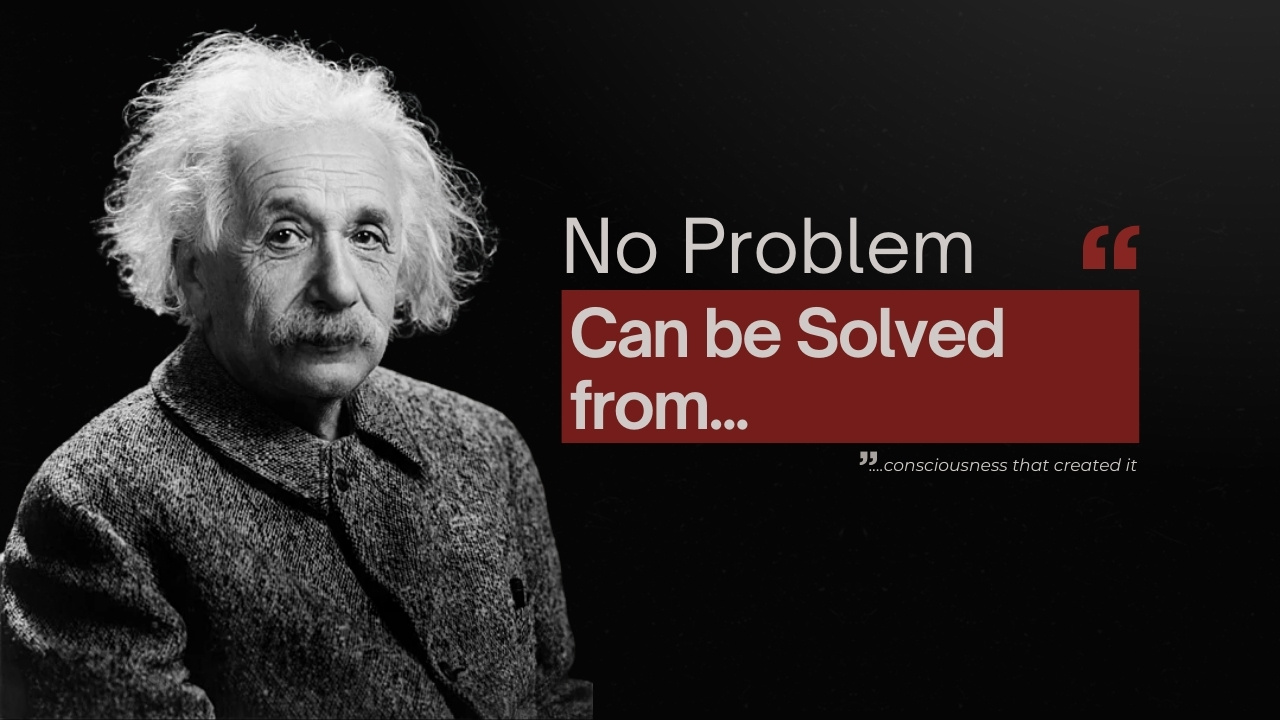
Some quotes remain powerful because they explain complex ideas in very simple words. Albert Einstein’s thoughts on human thinking and problem-solving fall into this category. His words continue to guide people who are trying to understand why many problems repeat themselves despite effort and progress.
The quote, “No problem can be solved from the same level of consciousness that created it,” encourages deeper reflection rather than quick fixes. It suggests that solutions require a change in how people think, not just what they do.

Even today, this message applies to personal life, leadership, education, and global challenges. The quote reminds readers that growth begins in the mind, and lasting solutions come from awareness, learning, and perspective change.
Table of Contents
Understanding the Meaning of the Quote
Albert Einstein’s quote focuses on the idea that problems are born from certain ways of thinking. When the same mindset is used again and again, the same outcomes often repeat. According to this idea, real change only happens when thinking itself evolves.
The phrase “level of consciousness” refers to beliefs, assumptions, habits, and values that guide decisions. If those inner patterns remain unchanged, external solutions may only offer temporary relief. Einstein believed that progress depends on questioning old ideas and being open to new ways of understanding.

In basic terms, the quote teaches that solving problems requires learning, self-reflection, and mental growth. Without these, even strong efforts may fail to produce meaningful results.
Historical Background Behind Einstein’s Words
The quote is often connected to Einstein’s concerns after World War II. During this period, he warned humanity about the dangers of advanced technology combined with limited ethical thinking. The development and use of atomic weapons deeply influenced his public messages.

Einstein believed scientific knowledge had grown faster than human responsibility. He repeatedly emphasized that survival depended on changing how people think about power, conflict, and cooperation. His call was not for better weapons or tools, but for wiser thinking.
Although the exact wording is a simplified version of his ideas, the message reflects his repeated statements about the need for a “new way of thinking” to avoid future disasters.
The Role of Consciousness in Problem-Solving
Consciousness, as Einstein described it, goes beyond intelligence or education. It includes emotional awareness, moral responsibility, and the ability to see beyond personal interest. When problems are approached with narrow thinking, solutions often remain limited.
A higher level of consciousness allows people to step back and view problems from different angles. This can lead to cooperation instead of conflict, understanding instead of blame, and prevention instead of reaction.
Einstein’s idea encourages people to slow down, reflect, and ask deeper questions before acting. This approach often leads to more sustainable and meaningful solutions.
Relevance in Modern Life
In today’s world, the quote applies to many areas such as leadership, mental health, education, environmental issues, and workplace challenges. Many modern problems exist not because of lack of resources, but because of repeated patterns of thinking.
For individuals, the quote suggests that personal struggles may require inner change rather than external fixes. For organizations and governments, it highlights the importance of long-term thinking and ethical decision-making.
The message remains clear: progress is not only about doing more, but about thinking differently.
Albert Einstein’s Broader Philosophy
Albert Einstein was not only a scientist but also a thinker concerned with humanity’s future. He believed knowledge must be guided by responsibility and compassion. His public speeches and writings often focused on peace, cooperation, and global understanding.
He warned that intelligence without wisdom could become dangerous. This belief shaped many of his later messages and explains why his quotes continue to resonate across generations.
Einstein’s legacy reminds readers that true intelligence includes awareness, humility, and a willingness to grow beyond old beliefs.
Why This Quote Still Matters Today
The lasting power of this quote lies in its simplicity and depth. It does not offer an instant solution, but it points toward a mindset that encourages learning and change. This makes it useful across cultures, professions, and generations.
As challenges become more complex, Einstein’s message feels increasingly relevant. It encourages people to pause, reflect, and elevate their thinking before seeking answers.
Ultimately, the quote serves as a reminder that the quality of solutions depends on the quality of thought behind them.
Many problems are badly presented and if more completely presented would have a trivial solution.it connects with the quote because if the problem is presented completely and accurately and is not trivial then it needs a higher or different approach for its solution.
Knowledge without the understanding of the law that govern life is extremely dangerous to the one that has knowledge and to life itself.
Very interesting idea. Would you be kind to elaborate on why you think this ? Thank you and i look forward to reading further explanations about this, after which if you like, I shall also be happy to provide my own insights. Hoping this messages reaches you in good health and happiness. Have a wonderful day.
The enlightening article and more relevant today than ever
We to slow down an think.Be at peace an the answers will come.