
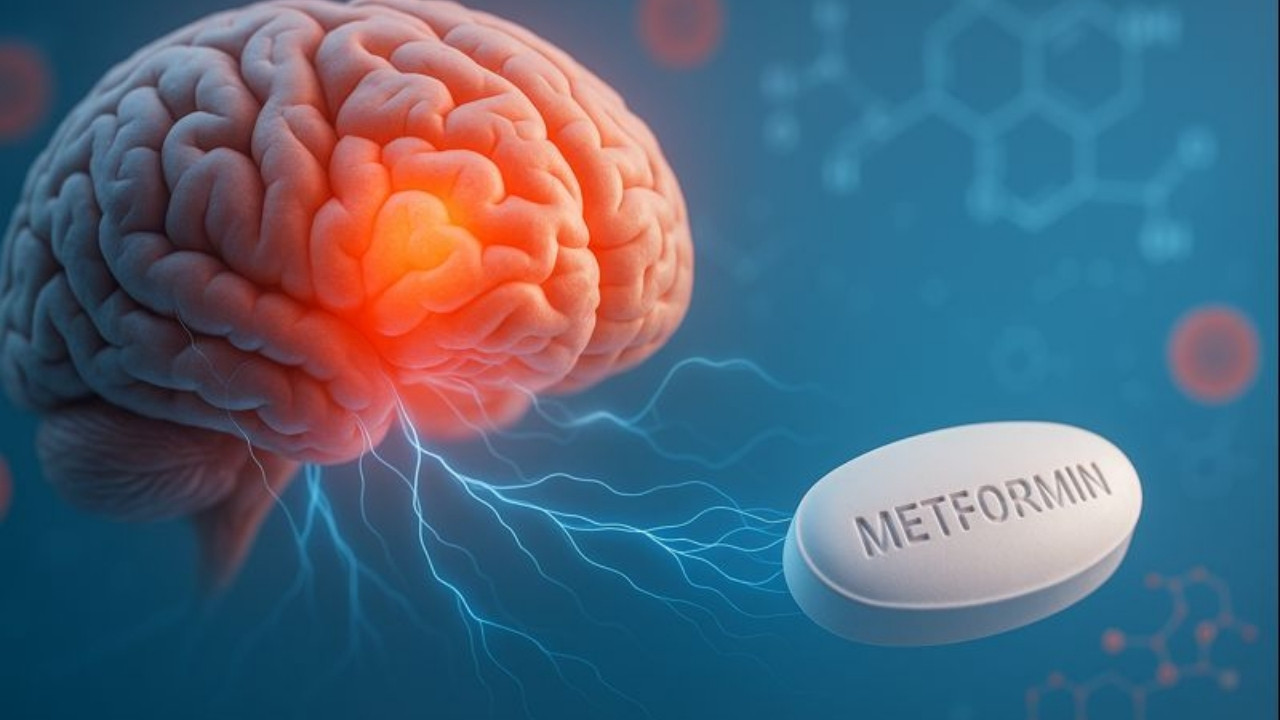
Metformin has been prescribed for type 2 diabetes since the late 1950s and is taken daily by more than 150 million people worldwide. For decades, its benefits were primarily attributed to reduced hepatic glucose production and improved insulin sensitivity in skeletal muscle. New research shows that this long-used drug also acts directly on the brain, altering how blood sugar is regulated centrally.
Scientists studying the drug found that metformin modulates specific neurons in the hypothalamus, a brain region that regulates metabolism, appetite, and energy balance. These effects were observed at relatively low doses and appear to involve a molecular switch, Rap1, which is involved in cell signaling.

This discovery is important because it challenges the traditional understanding of how metformin works and helps explain why the drug has effects beyond blood sugar control, including weight changes and possible links to aging and brain health.
Table of Contents
How the discovery was made
The research was based on laboratory studies using animal models and advanced genetic techniques. Scientists focused on the ventromedial hypothalamus (VMH), a brain region known to influence glucose homeostasis. Within this region, they examined a group of neurons called SF1 neurons, which are involved in energy and metabolic regulation.

Researchers found that metformin suppresses Rap1 activity in these neurons. When Rap1 activity was reduced, blood glucose levels improved. However, when Rap1 was genetically removed or blocked in the VMH, metformin lost much of its glucose-lowering effect. This showed that part of the drug’s benefit depends on brain signaling, not only on actions in the liver or gut.
I paused Metformin.
A longevity staple in my protocol for 5+ years.
But its effects on my body were shocking.It built up my energy capacity,
but limited my ability to use 90% of it.Here’s what we found. 🧵
— Bryan Johnson (@bryan_johnson) August 7, 2025
| Aspect | Information |
|---|---|
| Drug studied | Metformin |
| Years in clinical use | ~60 years |
| Brain region involved | Ventromedial hypothalamus (VMH) |
| Key molecular target | Rap1 protein |
| Primary finding | Brain signaling is required for the full glucose-lowering effect |
Why this finding matters
For many years, metformin was considered a purely peripheral drug. The identification of a brain-based mechanism changes how scientists understand diabetes treatment. It suggests that glucose control is influenced by communication between the brain and other organs to a greater extent than previously believed.

This insight may also explain why metformin has been associated with mild weight loss, changes in appetite, and improved metabolic stability. The hypothalamus plays a central role in these processes, so altering its signaling can affect the entire body.
From a research perspective, the finding opens the possibility of developing future diabetes treatments that target brain pathways with greater precision. Such approaches could improve glycemic control while minimizing adverse effects.
| Area | Explanation |
|---|---|
| Drug development | New targets for diabetes and obesity treatments |
| Understanding side effects | Clarifies why metformin affects appetite and weight |
| Clinical impact today | No immediate change in prescriptions |
| Key limitation | Evidence is mainly from animal studies |
Links between diabetes drugs and brain health
Interest in the connection between diabetes medications and the brain has increased in recent years. Some studies have suggested that people taking metformin may have a lower risk of cognitive decline, although results are mixed and inconclusive. The new evidence of direct brain action provides a possible biological explanation for these observations.
At the same time, researchers stress caution. The brain is highly sensitive, and altering signaling pathways can have complex effects. Extensive human studies are needed to determine whether the specific mechanisms operate in humans and whether they confer long-term benefits or pose risks.
Takeaways from the research
- Metformin acts directly on the brain, as well as on the liver and muscles.
- The drug works by reducing Rap1 activity in specific hypothalamic neurons.
- Brain signaling is necessary for the full glucose-lowering effect of metformin.
- Current findings are based mainly on animal studies.

What researchers are studying next
Scientists are now working to confirm whether the specific brain mechanisms occur in humans taking standard doses of metformin. Clinical imaging and biomarker studies may help identify shared pathways among individuals with diabetes.
Future research will also explore whether targeting brain signaling could improve treatment for related conditions such as obesity or metabolic syndrome. Safety remains a priority, as any therapy affecting the brain must be carefully tested.
Ongoing research questions
- Do these brain effects occur in humans at routine doses?
- Can brain-targeted therapies improve diabetes outcomes?
- Are there long-term effects on cognition or aging?
- How does this pathway interact with other diabetes medications?
After nearly 60 years of widespread use, metformin continues to reveal new aspects of its mechanism of action. The discovery that it affects the brain highlights the complex relationship between metabolism and neural control. While this finding does not change current medical advice, it provides valuable insight that may guide future diabetes treatments. As research continues, metformin remains a reminder that even the most familiar medicines can hold unexpected scientific surprises.