
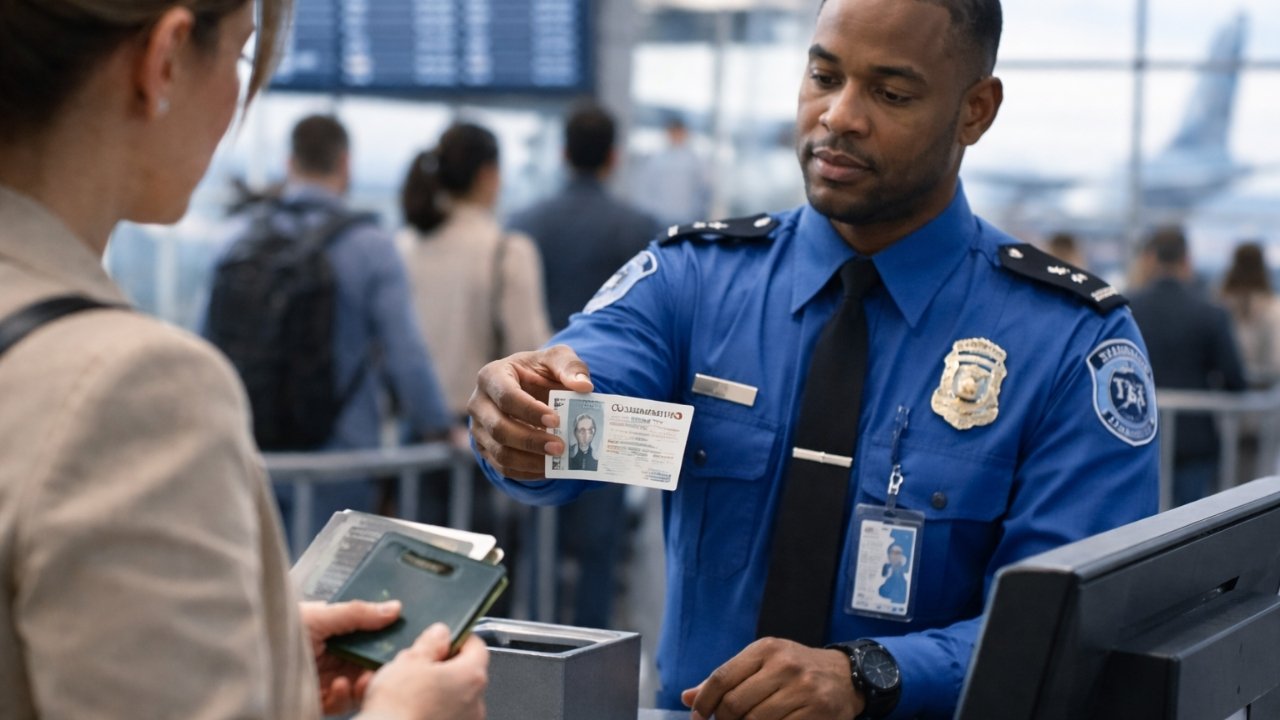
After nearly twenty years of delays, the Real ID Act is now being enforced nationwide, creating a significant shift in how Americans travel and verify their identity. What was once a future compliance issue has become an immediate requirement, particularly for domestic air travel. Travelers without a Real ID–compliant license are now being stopped at TSA checkpoints, resulting in missed flights and sudden travel disruptions.
Federal agencies ended all remaining extensions after determining that identity verification systems are now capable of real-time cross-checking across national databases. As a result, the Real ID standard is no longer optional for those who rely on a state-issued license to fly or access secure federal facilities.
Table of Contents
Social Security Verification as the Foundation of Real ID

The most significant requirement tied to Real ID issuance is verification of a valid Social Security Number. Federal guidance stresses that without successful SSN verification, a Real ID cannot be issued under any circumstances. This rule applies regardless of citizenship, length of residency, or previous licensing history.
The emphasis on SSN verification stems from the fact that the number links identity to employment records, tax filings, and lawful presence data. This allows state agencies to reduce fraud and duplicate identities. Still, it has also exposed long-standing documentation issues for many applicants, particularly those with name changes or incomplete historical records.
Documentation Standards Applicants Must Meet
Applicants are not always required to present their physical Social Security card, but they must submit official documents that clearly display their full legal name and complete SSN. These documents must be original or certified copies, as photocopies and digital images are not accepted under federal rules.

Even minor discrepancies, such as partially masked SSNs or mismatched names, can result in delays or denial. This has significantly increased processing times at state DMVs, especially in high-population states.
Commonly Accepted Proof of SSN for Real ID
| Document Type | Accepted | Key Requirement |
|---|---|---|
| Social Security Card | Yes | Original or certified copy |
| W-2 Form | Yes | Full SSN and legal name visible |
| SSA-1099 / Non-SSA-1099 | Yes | Official and unaltered |
| Pay Stub | Yes | Complete SSN displayed |
Standard Licenses and Their New Limitations
States continue to issue standard driver’s licenses to individuals who either do not apply for Real ID or fail to meet federal requirements. However, these licenses are no longer valid for domestic flights or for entry into secure federal buildings, representing a significant policy shift for travelers.
Because states retain authority over standard license rules, documentation requirements vary widely. This inconsistency has confused many travelers, who assume all state-issued licenses provide the same federal access, which is no longer the case.

Identification Options for Air Travel Without Real ID
For travelers who have not yet obtained a Real ID, the TSA continues to recognize a limited set of alternative identification documents. These options allow domestic travel but are not intended to replace Real ID in the long term, particularly during peak travel periods when additional screening is standard.
TSA-Approved Alternatives to Real ID
- U.S. passport or passport card
- DHS Trusted Traveler cards (Global Entry, NEXUS, SENTRI, FAST)
- U.S. Department of Defense ID
- Permanent Resident Card
- Foreign passport with valid immigration documentation
Populations Facing the Most Compliance Challenges
While the Real ID requirement applies broadly, certain groups are encountering greater difficulty completing the process. These challenges are often linked to missing records, unresolved identity inconsistencies, or changes in legal status over time.
Groups Most Affected by Real ID Enforcement
- Individuals never issued a Social Security Number
- Migrants with incomplete or inconsistent records
- Temporary residents with changing legal status
- U.S. citizens with name changes or historical documentation errors
These applicants often require coordination across multiple agencies, resulting in longer wait times and repeat DMV visits.

TSA-Recognized identification for Domestic Flights
To clarify the current policy, the TSA recognizes several forms of identification in addition to Real ID for domestic air travel. However, reliance on alternative documents may result in additional screening or delays.
| Accepted ID Type | Issuing Authority |
|---|---|
| Real ID–compliant license | State DMV |
| Enhanced Driver’s License | Select U.S. states |
| U.S. Passport / Passport Card | U.S. Department of State |
| Trusted Traveler Cards | Department of Homeland Security |
| Military ID | U.S. Department of Defense |
| Employment Authorization Card (I-766) | DHS |
| Veteran Health Identification Card | U.S. Department of Veterans Affairs |
| Tribal Photo ID | Federally recognized tribes |
| Merchant Mariner Credential | U.S. Coast Guard |
Real ID enforcement has fundamentally changed how Americans prove their identity for travel and federal access. What was once a routine license renewal process is now tightly linked to federal verification systems, with strict documentation standards and limited flexibility.
Preparing early, confirming documentation accuracy, and understanding acceptable alternatives remain the most effective ways to avoid disruptions. As enforcement continues, Real ID is quickly becoming not just a travel requirement but a new baseline for everyday identification across the United States.