
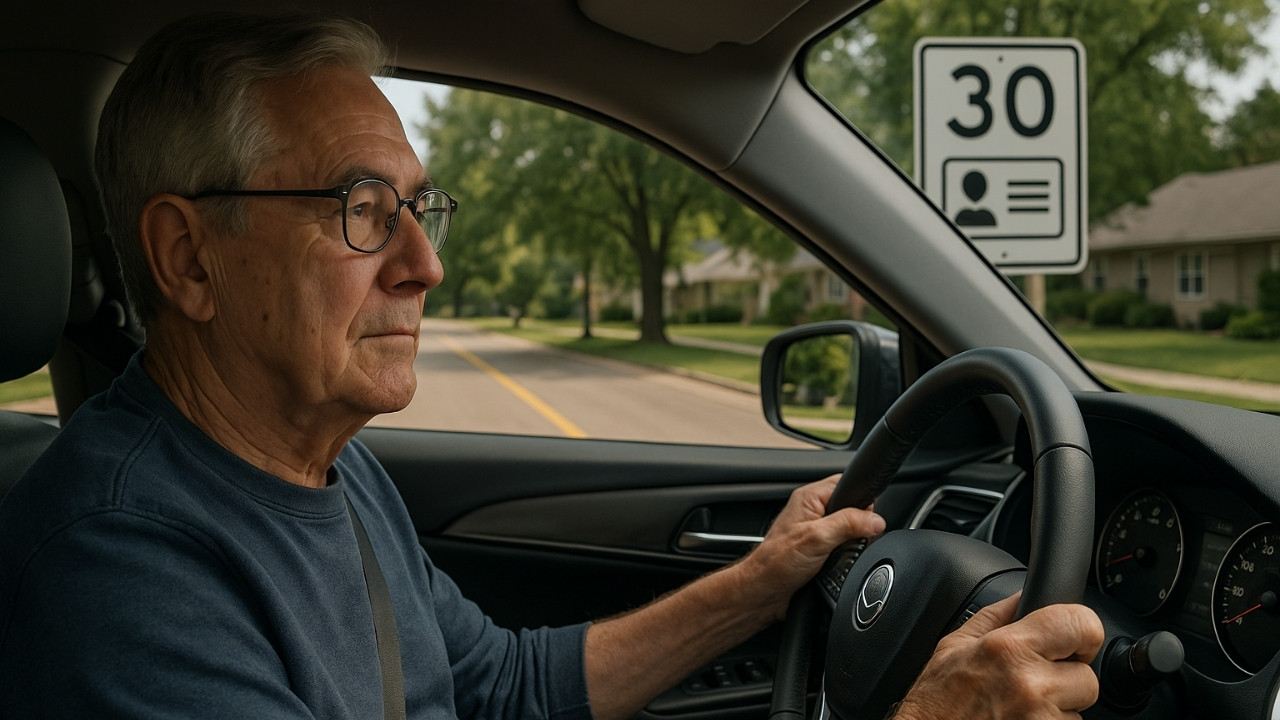
Driving is an important part of daily life for many Illinois residents, especially older adults who rely on personal vehicles for shopping, medical visits, and social activities. For many years, Illinois followed strict age-based rules that required seniors to complete frequent and sometimes stressful license renewal tests.
In recent years, these rules have received attention from lawmakers and advocacy groups who questioned whether age alone should determine a person’s ability to drive safely. Data showed that Illinois was applying stricter requirements to older drivers than most other states.

As a result, Illinois passed a new law that significantly changes how older drivers renew their licenses. These updates adjust testing ages, renewal timelines, and safety reporting rules, bringing Illinois in line with national practices while maintaining road safety.
Table of Contents
Senior Driver License Rules in Illinois Before the Law Change
Before the new law was passed, Illinois had one of the most age-based license renewal systems in the United States. The requirements increased sharply once a driver reached their mid-70s, regardless of driving history or medical condition.
Drivers aged 75 and older were required to renew their license in person at a Secretary of State facility. This in-person renewal included a mandatory vision test, and in some cases, a written exam if there were recent traffic violations or concerns.

The most significant rule applies to drivers aged 79 and older. At that age, Illinois required a behind-the-wheel road test for every license renewal. This made Illinois the only state that mandated road testing strictly based on age rather than ability.
Renewal frequency also increased with age. Drivers aged 81 to 86 had to renew their license every two years, while drivers aged 87 and older were required to renew annually.
🚨 LEGISLATIVE UPDATE: #HB1226 passed the Illinois Senate 57-0! The Road Safety & Fairness Act, which passed the House unanimously last month, calls for enhanced safeguards to increase safety on our roads, while aligning Illinois senior driving standards with the rest of the U.S. pic.twitter.com/kvmL0cCm6v
— Secretary Alexi Giannoulias (@ILSecOfState) May 22, 2025

New Illinois Law Changing Senior License Renewal Requirements
Illinois lawmakers approved the Road Safety and Fairness Act, which was signed into law and will take effect on July 1, 2026. The purpose of the law is to reduce age-only testing while still ensuring unsafe drivers can be identified and evaluated.
The most important change is that the age for mandatory behind-the-wheel driving tests increases from 79 to 87. This means many older drivers will no longer be required to complete a road test solely due to their age.
The law keeps in-person renewals and vision screening in place for older drivers, but removes unnecessary road testing for those who meet safety and vision standards. Illinois officials confirmed that the law aligns the state with national licensing practices.
Updated Age-Based License Renewal Requirements in Illinois
Under the new law, license renewal rules vary by age group but focus more on vision and safety history rather than automatic driving tests.
Age-based requirements under the new law include:
- Drivers aged 79 to 80 must renew in person and pass a vision test; a written test is required only if there are driving violations
- Drivers aged 81 to 86 must renew every two years and complete a vision screening, but no road test is required
- Drivers aged 87 and older must renew annually and continue to take a behind-the-wheel driving test
These requirements apply equally to all drivers in each age group, regardless of gender or license class.
Why Illinois Changed Its Senior Driving Rules
State data and national research showed that older drivers are not automatically high-risk drivers. In many cases, crash rates among older drivers are lower than those of younger drivers when adjusted for miles driven.
Illinois officials acknowledged that using age alone to require road tests did not reflect actual driving ability. The previous system also placed a burden on seniors who had clean driving records and no medical issues.
By raising the testing age and emphasizing vision screening and individual review, the law aims to apply safety rules more consistently across age groups.
Reporting Drivers Who May Be Unsafe to Drive
The new law also expands who can report concerns about a driver’s ability to operate a vehicle safely. Previously, reports were limited to medical professionals, law enforcement officers, and certain government officials.
Under the updated rules, immediate family members are allowed to submit written safety or medical concerns to the Illinois Secretary of State. This change allows those who observe daily driving behavior to raise concerns when necessary.
Any report must include factual information, and the Secretary of State may require the driver to undergo medical review, vision testing, or a driving evaluation based on the concern raised.
What Older Drivers in Illinois Should Expect Going Forward
Older drivers should continue to watch for renewal notices mailed by the Secretary of State before their license expires. Renewal dates are still tied to a driver’s birthday, and late renewals may result in penalties.
Vision tests remain a core requirement for older drivers, and any changes in medical condition that affect driving should be reported as required by law. Drivers with traffic violations may still be asked to complete additional testing.
Overall, the new system reduces age-based testing while keeping safeguards in place to identify unsafe driving. These changes officially begin in mid-2026, giving drivers time to prepare.