
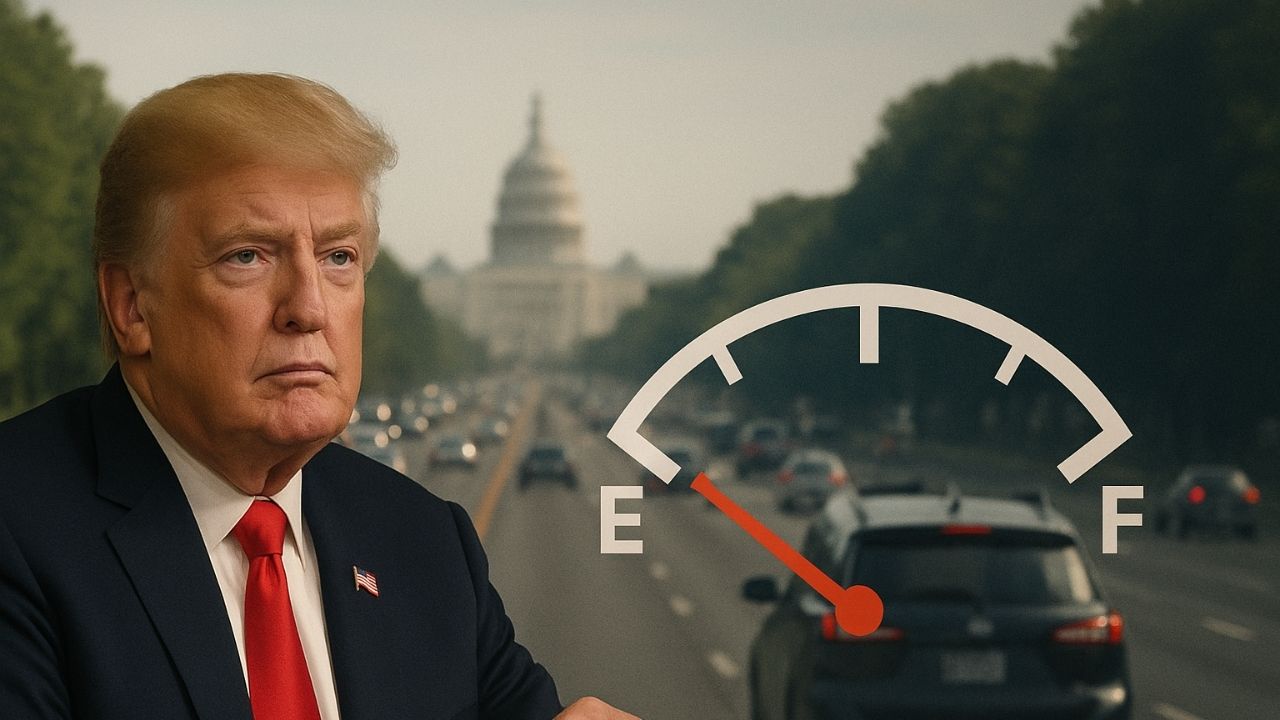
The Trump administration has released a sweeping update to federal vehicle-efficiency rules, marking one of the most significant shifts in national auto policy since the creation of the CAFE program in 1975. The announcement, delivered on December 3, 2025, outlines a new framework that lowers the long-term mileage targets set during the previous administration. Senior auto executives joined federal officials at the White House to introduce the latest benchmarks.
Under the revised plan, the required corporate average fuel economy for new light-duty vehicles will be reduced from the earlier target of about 50.4 miles per gallon by 2031 to an estimated 34.5 mpg. The updated standards reshape how automakers will plan future models, manufacturing strategies, and investment timelines.

The policy change also ends the longstanding waiver that allowed states, notably California, to set independent emissions requirements. By reinstating one national standard, the administration aims to create a unified regulatory landscape for all automakers operating in the United States.
Table of Contents
Federal Shift in Mileage Requirements
The New CAFE Framework Changes the pace of efficiency growth required between 2027 and 2031. Instead of the earlier schedule, which mandated rapid annual increases to reach the 50.4 mpg target, the revised plan introduces slower, more moderate improvements. Federal documents state that the new target reflects widely available technologies rather than advanced systems that require significant engineering and cost.
This adjustment affects the entire light-duty vehicle fleet, including passenger cars, SUVs, crossovers, and pickup trucks. Automakers now have greater flexibility to design and produce models that better match current consumer demand, particularly in markets where larger vehicles dominate sales.

The reset also rolls back policies issued between 2022 and 2024, which focused heavily on accelerating emissions reductions. Those measures required extensive incorporation of high-efficiency technologies, hybrid systems, and lightweight components.
“On Wednesday, President Donald Trump announced a comprehensive reset of federal fuel economy standards, aiming to ease regulations on the auto industry to boost American manufacturing and reduce costs for consumers.”https://t.co/qLkLN1c16v
— Karoline Leavitt (@PressSec) December 6, 2025
New Standards Compared With Previous Rules

The difference between the previous and revised fuel-economy targets illustrates a major shift in regulatory expectations. Under the new plan, the final 2031 efficiency figure is approximately 16 mpg lower.
| Regulatory Framework | 2031 Target | Approach |
|---|---|---|
| Biden-Era Standard | ~50.4 mpg | Rapid annual gains |
| Trump Reset Standard | ~34.5 mpg | Slower growth trajectory |
Federal estimates also highlight projected savings for consumers due to reduced production expenses:
| Period | Estimated Savings | Explanation |
|---|---|---|
| 2027–2031 | US$109 billion | Lower manufacturing cost requirements |
Administration’s Stated Priorities
The administration attributes the reset to concerns about rising vehicle prices, production feasibility, and regulatory complexity. Automakers have reported that earlier efficiency targets required heavy investment in specialized technologies, which contributed to higher sticker prices for buyers. The federal estimate of US$109 billion in consumer savings reflects reduced engineering and compliance expenses.
Officials also emphasized predictability in long-term planning. Car manufacturers often schedule platform and engine development up to five years in advance, and slower efficiency increases allow companies to maintain stable production cycles. The reset, they argue, brings federal standards more in line with technological readiness across different vehicle categories.
Another core priority is the re-establishment of a nationwide regulatory framework. The withdrawal of California’s emissions waiver is intended to prevent manufacturers from designing separate versions of vehicles for different states.
Impact of Ending State-Level Emission Programs
For decades, California held a unique position in national vehicle regulation, setting stronger emissions and fuel-efficiency rules under a special waiver. More than a dozen states typically followed these standards, creating two regulatory paths within the U.S. auto market.
The new policy eliminates that structure and applies the exact federal requirements to all states. According to the administration, the change reduces compliance challenges and simplifies certification processes for manufacturers. For states that previously relied on higher standards to advance local emissions goals, the shift represents a major regulatory change.
Industry Response and Market Implications
Automakers are re-evaluating their production plans in light of the revised targets. With slower efficiency gains expected, companies may reallocate resources across gasoline, hybrid, and electric vehicle product lines. This could affect the number of electric models introduced in the coming years, as the regulatory incentives for EV adoption decline.
The new rules also lower compliance pressures for trucks and SUVs, which typically consume more fuel. Manufacturers producing these segments stand to benefit from adjusted penalties and more flexible engineering requirements.
Fuel consumption across the national fleet is expected to exceed earlier projections. Since vehicles will not meet the previously planned efficiency levels, gasoline consumption is likely to increase, affecting long-term modeling for emissions planning.
Regulatory Path Ahead
The National Highway Traffic Safety Administration will now oversee the public comment period and evaluate technical input from industry groups, states, and researchers. After reviewing submissions, the agency will finalize the standards and issue detailed compliance guidelines.
Once the rule is complete, automakers will align their multi-year production strategies with the updated requirements. Any future changes to the standards would require a new federal rulemaking cycle.

Frequently Asked Questions
What is the new national fuel-economy target announced by the Trump administration?
The revised target sets the 2031 corporate average fuel economy at approximately 34.5 miles per gallon, replacing the earlier requirement of around 50.4 mpg.
Why did the administration lower the previous fuel-efficiency standards?
Federal officials state the update aims to reduce vehicle production costs, improve long-term planning conditions, and align standards with widely available technology.
What happens to California’s ability to set independent emissions rules?
The reset ends California’s waiver, meaning the state and all others must follow the single national standard established by federal regulators.
How much consumer savings does the government estimate under the new rule?
The administration projects approximately US$109 billion in savings between 2027 and 2031 due to reduced manufacturing and compliance costs.
Will gas consumption increase under the revised standards?
Yes. Because vehicles will be less fuel-efficient than previously planned, national gasoline usage is expected to rise over the coming years.