
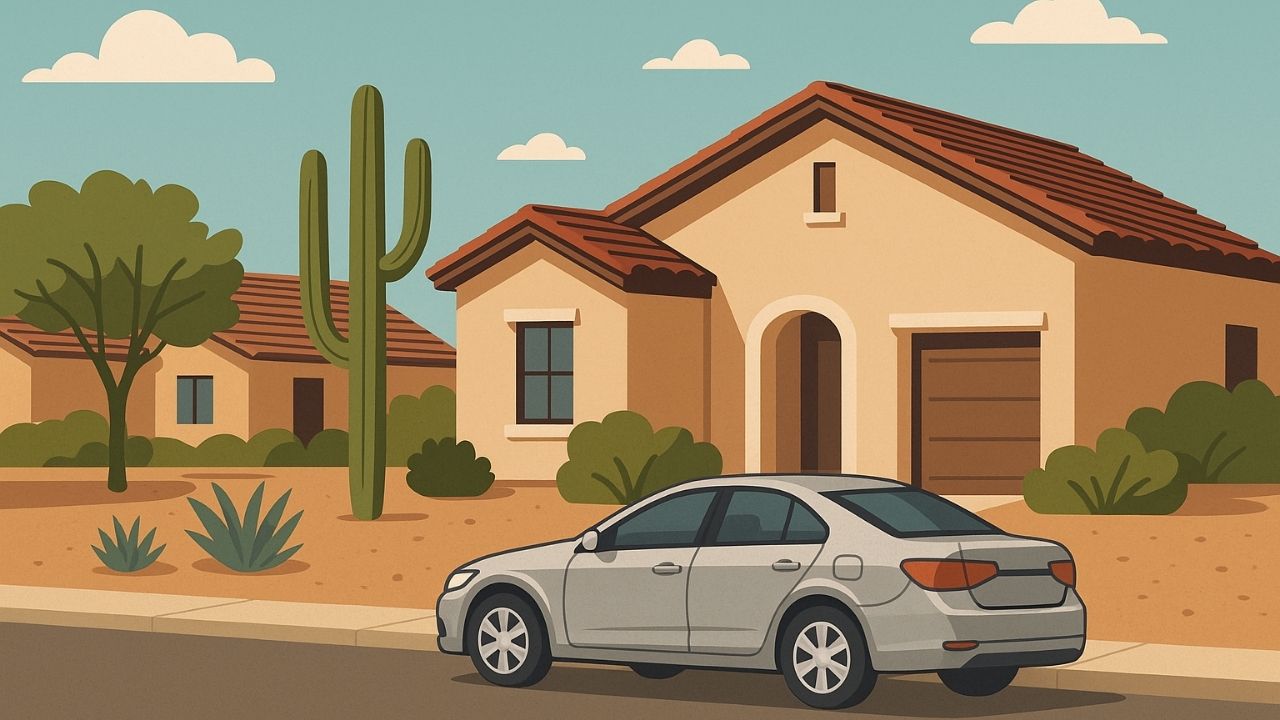
Holiday gatherings, weekend events, and family visits continue to increase the demand for neighborhood parking in Arizona, especially in cities such as Phoenix, Mesa, and Tucson, where many homes lack dedicated guest spaces. As more drivers rely on curbside parking, residents often notice unfamiliar vehicles near their property and question whether such parking is legally allowed.
Concerns typically arise when a parked vehicle appears too close to a driveway, restricts visibility, or sits in front of a home for several hours. These situations are common across Arizona residential areas, leading many homeowners to ask whether they can request police intervention or towing. Arizona law provides a clear framework for understanding public parking rights and the limits of a homeowner’s authority.
Table of Contents
Arizona’s Legal View on Parking in Front of Residential Properties

Arizona law distinguishes between publicly maintained streets and privately controlled roadways. On public roads, the curb area in front of a house is not considered personal or private property. That means any driver may legally park there as long as the vehicle complies with posted restrictions, time limits, and safety rules. This policy applies statewide and ensures consistent access to public roads.
State statutes do not prohibit parking in front of someone else’s home. Instead, Arizona focuses on safety-based regulations. These rules include maintaining a clear view at intersections, keeping fire lanes open, and ensuring that driveways remain unobstructed. If a vehicle respects these requirements, its presence in front of a house is not grounds for police removal.
Cities such as Phoenix and Scottsdale reinforce these safety rules with signage and curb markings. Local ordinances may add restrictions, such as limited-time parking or temporary construction closures. In all cases, enforcement relies on visible indicators rather than on residents’ personal preferences.
View this post on Instagram
Parking Conduct Expected on Public Streets

Drivers who use public residential streets must follow statewide and municipal parking standards. These rules prioritize visibility, safe vehicle flow, and emergency access. They determine whether parking in front of someone’s home is legal.
To clarify these expectations, the following table outlines core statewide rules and the purpose behind each requirement.
Arizona Public Parking Requirements
| Requirement | Explanation | Purpose |
|---|---|---|
| Follow posted signs | Includes time limits, no-parking hours, and temporary restrictions. | Helps manage traffic and ensures compliance. |
| Observe curb colors | Red, yello,w and blue curbs indicate specific restrictions. | Keeps emergency and service access unobstructed. |
| Keep safe distance from intersections | Vehicles cannot block sightlines or turn paths. | Improves safety for approaching traffic. |
| Leave hydrants accessible | Parking too close is prohibited. | Ensures rapid fire response. |
| Avoid blocking driveways | Driveway access must remain open. | Allows property owners safe entry and exit. |
These rules apply regardless of who owns the property in front of the parked vehicle and are enforced uniformly across public streets.
Why Homeowners Cannot Order a Tow on Public Roads

Residents frequently believe they can request towing when an unfamiliar car is parked in front of their home. Under Arizona law, this is generally not allowed unless the vehicle violates a specific regulation. Police departments receive such complaints regularly, yet officers cannot remove a car solely because it belongs to a nonresident or is parked for an extended period.
Homeowners do not control public curb space and cannot authorize towing companies to remove vehicles from publicly owned roads. Towing can occur only when a legal violation exists, such as obstructing a fire hydrant, parking in a restricted zone, or blocking a driveway. Without these conditions, law enforcement cannot intervene.
Some neighborhoods, however, operate under homeowners’ associations (HOAs) where private roads are subject to community parking rules. These rules must be clearly posted, and enforcement is carried out by the HOA, not the public police. Even in such communities, public streets located outside the private area remain under city authority.
Towing Rules and Safety-Based Restrictions
Arizona’s towing regulations prioritize public safety. Vehicles may be removed only under conditions that create hazards or impede emergency access. This ensures that towing is used as a last resort rather than for resolving personal disputes.
Areas where towing is allowed must have clear signage listing the restrictions and the towing company’s contact information. Municipal records show that most towing incidents arise from safety violations or disregard for posted parking limits.
Common Reasons for Legal Towing in Arizona
| Violation | Impact | Enforcement |
|---|---|---|
| Blocking fire lanes or hydrants | Prevents emergency response | Immediate towing permitted |
| Double parking or obstructing traffic | Creates road hazards | Police-authorized removal |
| Parking in disability spaces without permits | Violates accessibility laws | Citation and towing |
| Parking in marked no-parking zones | Obstructs operations or safety | Signage-based enforcement |
| Expired vehicle registration | Violates municipal codes | Possible towing after citation |
These rules ensure consistent application of towing policy across Arizona neighborhoods, helping maintain safe and accessible streets.
Parking Exceptions in Permit Zones and HOA Communities
In some high-demand locations, such as areas near universities, entertainment venues, and major events, Arizona cities enforce residential permit zones. Only vehicles displaying the correct permit may park during restricted hours. Violations in these areas may result in citations or towing.
HOA-managed communities with private streets may also impose their own parking restrictions. These can include time-based limits, bans on oversized vehicles, or requirements for visitor registration. Since these streets are privately maintained, HOA rules take precedence, although enforcement must still follow posted signage and community guidelines.
Arizona law treats most residential curb space as accessible to all drivers, provided safety rules and posted regulations are followed. Homeowners cannot claim exclusive control over public curbside areas nor request towing without a legally recognized violation. Understanding these rules helps reduce neighborhood disputes and ensures consistent parking practices across the state.