
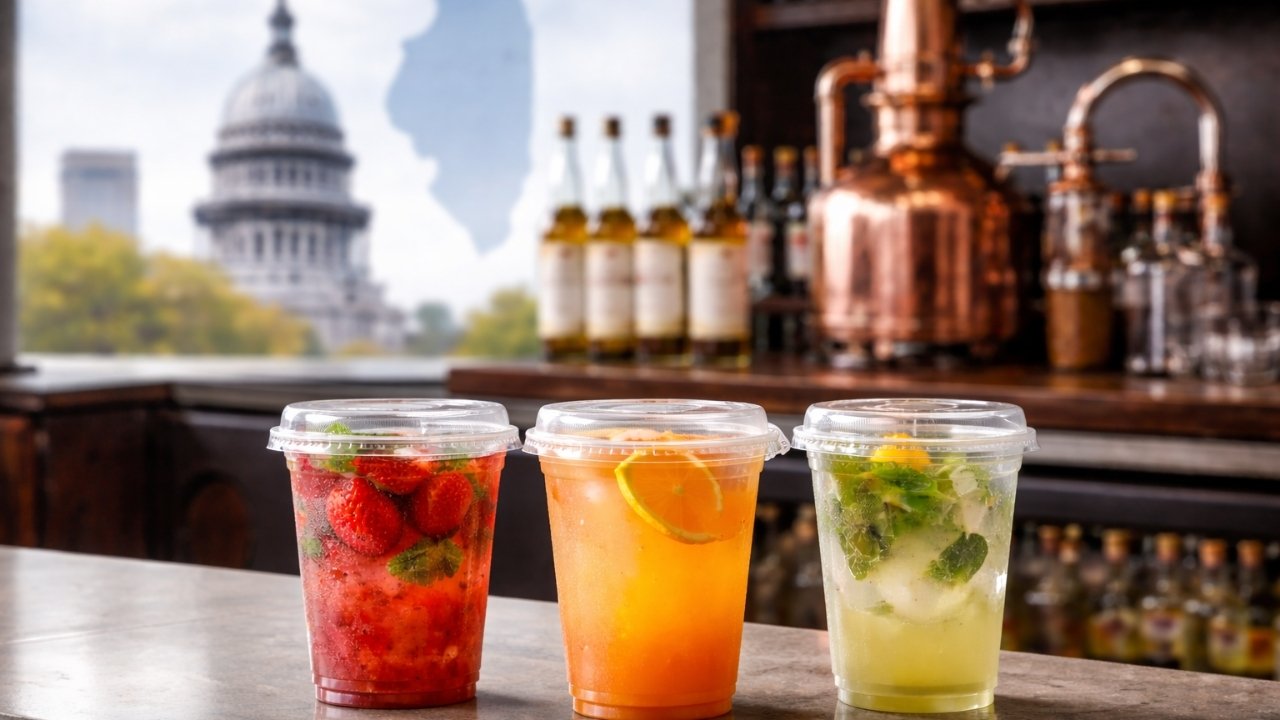
Illinois has formally updated its alcohol laws after the passage of Senate Bill 618, a wide-ranging amendment to the Liquor Control Act of 1934. The legislation, approved by the 104th General Assembly, makes cocktails to go a permanent option, introduces a new license category for craft distillers, and clarifies statewide rules for alcohol delivery, enforcement, and limited event-based spirit sales.
Lawmakers relied on compliance data and economic performance from the pandemic period, when off-premises alcohol sales were widely used. According to legislative discussions, the temporary rules showed stable enforcement outcomes. They provided critical revenue support to hospitality businesses, prompting the decision to make several provisions permanent while retaining public safety safeguards.
Cocktails-to-Go is officially PERMANENT in Illinois!
We thank Gov. Pritzker for signing SB 618 into law. This preserves a vital source of revenue for restaurants and provides a crucial lifeline against rising costs and labor shortages.#CocktailsToGo #IllinoisRestaurants pic.twitter.com/8kNWfNcGRU
— IllinoisRestaurants (@IlliniRestAssoc) December 16, 2025
Table of Contents
Cocktails to Become a Permanent Feature

With the adoption of Senate Bill 618, Illinois has removed the sunset date that previously applied to cocktails to go. Licensed restaurants and bars may now continue to offer mixed drinks for curbside pickup and delivery as part of their standard operations, rather than under temporary authority.
The law preserves all existing safety requirements. Mixed drinks sold outside the premises must be packaged in sealed, tamper-evident containers and include ingredient identification on labels or tags, as specified in regulatory guidance. Age verification remains mandatory at the time of sale and again at delivery, and responsibility for compliance stays with the licensed business even when third-party delivery services are used.
New Craft Distiller License Expands Production Options
Senate Bill 618 establishes a new Class 3 craft distiller license for small- and mid-sized producers seeking room to grow. Under the statute, Class 3 license holders may produce up to 100,000 gallons of spirits annually, a higher cap than lower-tier licenses but still below large commercial distillers.

The law also allows limited self-distribution within defined thresholds. State lawmakers described this change as a response to the rapid growth of Illinois craft distilleries, which have become an essential part of local economies through job creation, tourism, and agricultural sourcing. The updated licensing framework is intended to support expansion while maintaining oversight and supply chain balance.
Spirits Showcase Permit Introduced for Event Sales
In addition to the new distiller license, the legislation establishes a spirits showcase permit. This permit allows licensed distillers and distributors to sell limited quantities of spirits at approved temporary locations such as festivals, tastings, and promotional events.
The statute sets clear limits on the amount of spirits that may be transferred, sold, and purchased per person. Lawmakers emphasized that these restrictions are designed to allow controlled event-based sales without creating an alternative retail channel outside the traditional licensing system.
Statewide Rules Clarified for Alcohol Delivery

Senate Bill 618 provides clearer statutory direction on alcohol delivery, including the use of third-party platforms. Licensed retailers may continue to rely on external delivery services, but they remain legally responsible for age verification and lawful delivery practices.
The law also limits local governments’ ability to impose additional licensing requirements that conflict with statewide delivery and carryout rules. While municipalities retain regulatory authority, the intent is to avoid inconsistent standards that could disrupt businesses operating across multiple jurisdictions.
Enforcement Standards Updated Without Loosening Oversight
The amended law updates enforcement language related to underage compliance checks and service to visibly intoxicated individuals. These revisions align statutory wording with existing enforcement practices used by regulators.
Officials involved in drafting the bill stated that the enforcement authority has not been weakened. Instead, the changes are meant to improve clarity for license holders and inspectors, supporting consistent application of the law across the state.
What Businesses Should Review Going Forward
Restaurants and bars offering cocktails to go should review packaging, labeling, and point-of-sale procedures to ensure compliance with all statutory and regulatory requirements. Delivery policies should also be examined to confirm that age-verification steps are correctly documented.
Craft distillers considering the new Class 3 license are encouraged to evaluate production capacity, distribution plans, and licensing obligations before making changes. Event organizers and producers planning spirit showcases should confirm permit eligibility and compliance obligations well in advance.
A Long-Term Shift in Illinois Alcohol Policy
Senate Bill 618 reflects a broader shift in Illinois alcohol policy toward long-term regulatory stability. By converting temporary measures into permanent law while maintaining strict safeguards, lawmakers have provided clarity for businesses and continuity for consumers.
The updated framework supports growth in hospitality and craft distilling while reinforcing public safety standards, signaling that Illinois now views off-premises alcohol sales and controlled, event-based spirit offerings as permanent components of its regulatory landscape rather than short-term exceptions.