
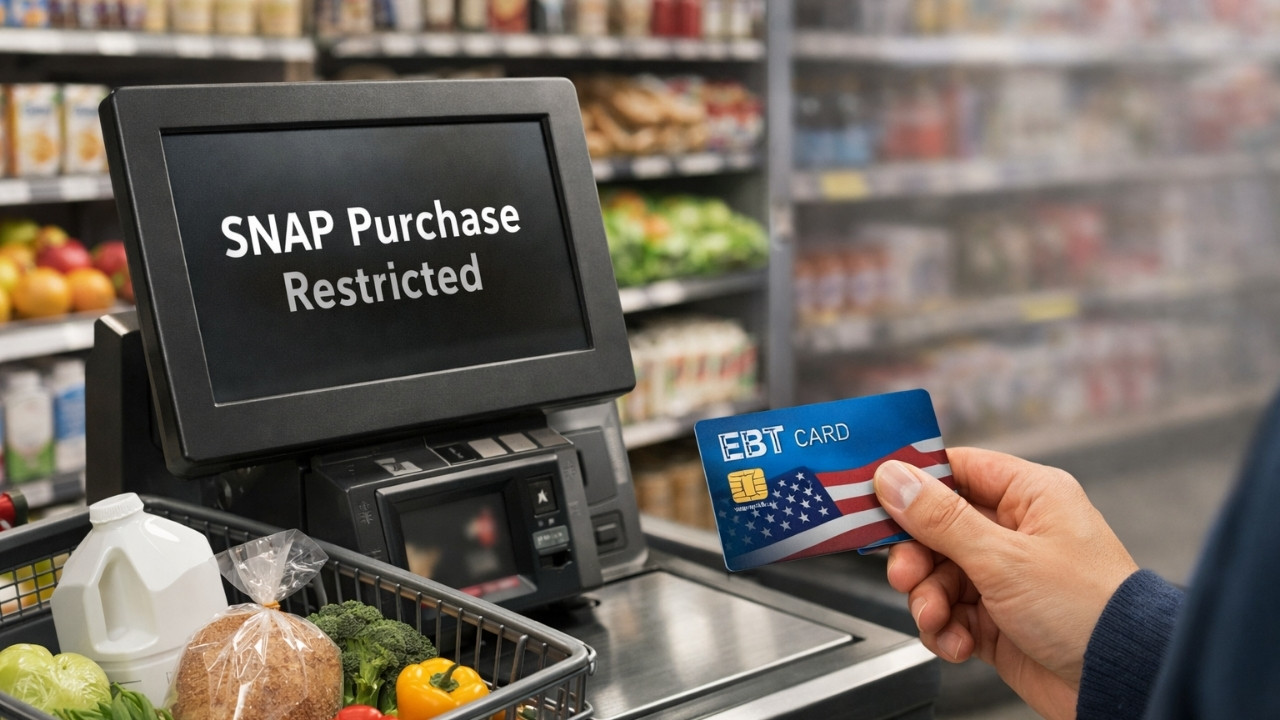
The Supplemental Nutrition Assistance Program, commonly known as SNAP, is entering a new phase starting in 2026. Federal approvals and state-level policy changes will introduce tighter rules on how benefits can be used and who qualifies to receive them.
These changes are being implemented gradually, with some states already approved to enforce restrictions once the new rules officially take effect. The focus of the updates is on food eligibility, work participation, and program administration.
Table of Contents
What SNAP Provides and How the Program Works
SNAP is a federally funded program administered by states to help low-income households purchase food. Benefits are issued monthly through an Electronic Benefit Transfer card, which works like a debit card at approved grocery stores.
The program is designed to support access to food, not prepared meals or non-food items. Alcohol, tobacco, vitamins, and hot foods have long been excluded from eligible purchases.
As of recent years, SNAP serves more than 40 million Americans nationwide. Eligibility is based on income, household size, and specific work or exemption requirements.
Why SNAP Rules Are Changing in 2026

The 2026 changes come from a combination of federal legislative updates and new waivers approved by the U.S. Department of Agriculture. These waivers allow states to limit SNAP purchases of certain food items.
Several states requested these changes to align SNAP spending with nutrition-focused goals. Federal authorities approved these requests under existing SNAP flexibility rules.
At the same time, broader legislative changes passed in 2025 expanded work requirements and shifted more administrative responsibilities to state governments.
@USDA is approving waivers allowing for restrictions on what #SNAP benefit holders can use their benefits on, including a waiver pending in CA.
Details from #RedwoodNews#food #sugar pic.twitter.com/DLwiqHVR0r— RedwoodnewsNBC3 (@redwoodnewsNBC3) December 12, 2025
States Approved to Restrict SNAP Food Purchases
Multiple states have received approval to restrict specific items that can be purchased using SNAP benefits beginning in 2026. These restrictions vary by state but follow a similar framework.

Florida is scheduled to begin enforcement on January 1, 2026. Texas, Oklahoma, Indiana, and several others are preparing similar rollouts after receiving federal approval.
Each state sets its own enforcement timeline and product definitions, but all must operate within USDA guidelines.
Food Items Affected by the 2026 Restrictions
The food restrictions focus on items that are widely categorized as low nutritional value. States use product definitions based on sugar content, processing level, and beverage classification.
Items commonly restricted under approved waivers include:
- Sugary sodas and sweetened beverages
- Candy and confectionery products
- Certain energy drinks with high sugar content
These restrictions apply only to SNAP funds. Recipients may still purchase these items using personal funds.
How Many States Are Expected to Enforce Restrictions
By the end of 2026, up to 18 states are expected to have some form of SNAP food restriction in place. Not all states will enforce identical rules.
Some states will apply narrow bans, while others may use broader definitions covering multiple product categories. USDA approval is required for every state-level restriction.
States that do not apply for or receive waivers will continue operating SNAP under existing federal rules.
Expanded SNAP Work Requirements in 2026
In addition to food purchase limits, SNAP work requirements will expand starting in 2026. Able-bodied adults without qualifying exemptions must meet minimum participation standards.
The updated rule requires at least 80 hours per month of work, job training, or approved community service. The age range covered by this requirement has been expanded.
Recipients who fail to meet these requirements may lose benefits after a set non-compliance period, unless they qualify for an exemption.
Exemptions That Still Apply Under New Rules
Certain groups remain exempt from SNAP work requirements even after the 2026 changes. These exemptions are defined at the federal level.
Exempt individuals include people with qualifying disabilities, pregnant individuals, caregivers of young children, and those deemed medically unable to work.
However, the exemption criteria are narrower than in previous years, meaning fewer recipients automatically qualify.
Administrative Cost Changes for States
Another major change affects how SNAP is funded at the state level. Beginning in 2026, states will be responsible for a larger share of administrative costs.
Previously, the federal government covered about half of these expenses. Under the new structure, states may need to fund up to 75 percent of administrative operations.
This change may affect staffing levels, application processing times, and outreach efforts, depending on state budgets.
How SNAP Recipients May Be Affected
Recipients in states enforcing restrictions may notice changes at checkout when purchasing food with SNAP cards. Items covered by restrictions will simply be declined for SNAP payment.
Those subject to work requirements will need to track and report monthly activity to maintain eligibility. Failure to report correctly may result in benefit suspension.
The overall benefit amount calculation remains unchanged, but eligibility enforcement will become stricter.
Implementation Timeline for 2026 Changes
Most SNAP restrictions are scheduled to begin between January and mid-2026, depending on state readiness. States must complete system updates, retailer guidance, and public notices before enforcement.
USDA oversight continues throughout implementation to ensure compliance with federal law. Additional states may apply for waivers after 2026.
Recipients are advised to monitor official state SNAP communications for exact dates and local rule details.