
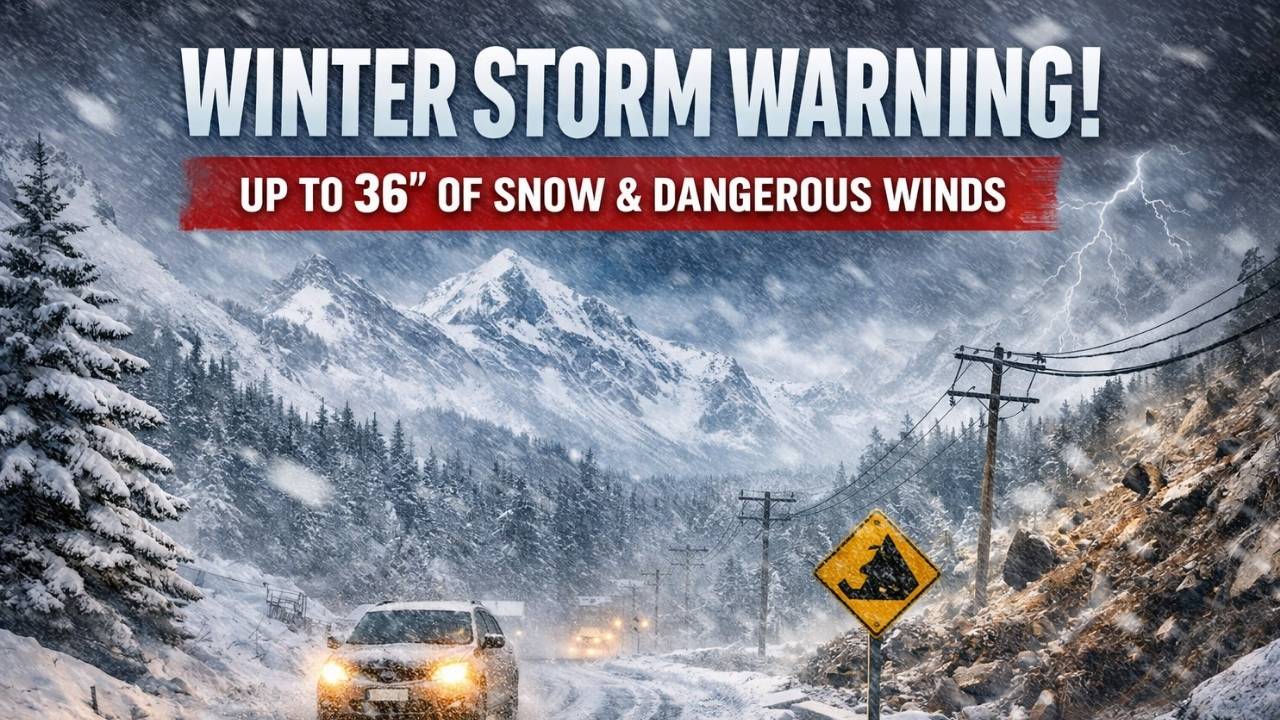
A powerful winter storm is set to intensify across the Pacific Northwest, prompting weather officials to issue a Winter Storm Warning for large portions of the region. Forecasts indicate up to 36 inches of snow in higher elevations, accompanied by strong winds and heavy rainfall at lower levels.
The storm arrives after several days of persistent rain that has already saturated soils across western Washington. With additional precipitation expected, authorities warn of increased risks to travel, infrastructure, and public safety.

Meteorologists say the combination of heavy mountain snow, damaging wind gusts, and unstable ground conditions makes this system one of the most disruptive weather events the region has faced so far this winter.
Table of Contents
Severe Weather Expands Across the Pacific Northwest
The Pacific Northwest is experiencing a multi-layered weather system affecting coastal areas, lowland communities, and mountainous regions simultaneously. Lower elevations continue to see steady to heavy rainfall, while colder air at higher elevations is producing widespread and intense snowfall.
According to forecast models, a strong cold front moving inland is enhancing precipitation rates and wind speeds. This front is driving snow into the northern Cascades before expanding southward into the southern Cascades and Olympic Mountains.

The repeated impact of consecutive storms has compounded regional vulnerability. Rivers, drainage systems, and soils are already under stress, leaving little capacity to absorb additional rainfall or snowmelt, increasing the likelihood of secondary hazards.
With snow over the weekend amounting to the first measurable or first significant measurable snow of the season in the Mid-Atlantic, here is a look at the seasonal snowfall totals and where they stand in the Eastern United States. pic.twitter.com/qwCQgviOhm
— NWS Eastern Region (@NWSEastern) December 15, 2025
Rainfall Totals Push Soil Stability to Critical Levels

Rainfall totals recorded over the past several days have been significant. Many areas across western Washington have received between 2 and 12 inches of rain, with isolated locations reporting totals as high as 17 inches. These amounts have elevated soil moisture levels to near saturation.
Highly saturated soil loses structural strength, especially on steep slopes. Additional rainfall increases the likelihood of landslides and debris flows, which can occur suddenly and cause damage to roads, homes, and utility infrastructure.
Burned areas from recent wildfire seasons face heightened risk due to the lack of vegetation that normally stabilizes soil. In these zones, even moderate rainfall can trigger rapid debris movement, posing serious safety concerns for nearby communities.
Heavy Snow Forecast for Cascades and Northern Rockies
The most intense snowfall is expected across the Cascade Range and Olympic Mountains, where several feet of snow could accumulate by Thursday morning. Snowfall began in the northern Cascades and is spreading southward as colder air deepens behind the advancing front.
Mountain passes and higher elevations are likely to experience rapid accumulation over a short period. Snowfall rates combined with gusty winds could produce near-whiteout conditions, significantly reducing visibility.
Further east, snow is spreading into the Northern Rockies. Forecasts indicate 1 to 2 feet of snow in many higher elevation areas, with isolated locations potentially receiving even more depending on elevation and localized conditions.
Travel Disruptions and Infrastructure Impacts Expected
Weather authorities have warned that travel could become “very difficult to impossible,” particularly across mountain passes. Snow-covered roads, icy surfaces, and blowing snow are expected to create hazardous driving conditions throughout the warning period.
Even major highways may face temporary closures as snow removal crews work to manage rapidly accumulating snow. Conditions are expected to change quickly, increasing the risk for motorists caught unprepared.
Air travel may also be affected as strong winds and low visibility disrupt flight operations at regional airports. Ferry services and coastal transportation routes could experience delays or cancellations due to rough marine conditions.
Strong Winds Increase Risk of Power Outages
Wind gusts of up to 65 miles per hour are forecast in exposed areas, particularly along ridgelines and mountain passes. When combined with heavy, wet snow, these winds significantly increase the risk of downed trees and power lines.
Utility providers warn that power outages may occur, especially in rural and mountainous communities where access for repairs can be limited. Prolonged outages are possible if severe conditions persist.
Emergency management officials advise residents to prepare for potential disruptions by ensuring access to heating, lighting, and essential supplies. Response times may be slower during peak storm conditions due to hazardous travel environments.
Duration of the Winter Storm Warning
The Winter Storm Warning is in effect from Tuesday morning through Wednesday evening, expiring at 10:00 p.m. Pacific Time on December 17. However, officials caution that impacts may continue beyond the official end time.
Lingering snowfall, runoff from melting snow, and ongoing rainfall at lower elevations could extend hazardous conditions into the following days. Weather agencies continue to monitor the system closely and may issue additional advisories if conditions worsen.
What Officials Are Advising Residents to Do
Authorities strongly recommend delaying non-essential travel until conditions improve. Those living in landslide-prone areas are encouraged to remain alert to warning signs, including unusual sounds, sudden changes in water flow, or visible ground movement.
Residents are also urged to stay informed through official weather updates, as conditions can evolve rapidly during high-impact winter storms.